IoT Lighting for Malaysian Commercial Buildings: What Changes in the Carpark
Key Takeaways:
- Beyond Basic Illumination: IoT lighting turns your building's traditional lighting infrastructure into a high-density, data-gathering sensor network.
- Predictive Maintenance: Smart AIoT dashboards alert facility managers to voltage drops and hardware issues before a light completely fails.
- ESG & GBI Success: Automated, real-time energy reporting makes strict corporate compliance and green building certification effortless.
- Zero CapEx Deployment: Malaysian properties can integrate these advanced systems instantly with zero upfront capital.
In the rapidly evolving landscape of Malaysian commercial real estate, traditional infrastructure is no longer sufficient to remain competitive.
Multinational tenants are demanding greener, smarter buildings. Investors are mandating strict ESG (Environmental, Social, and Governance) compliance. Meanwhile, rising TNB bills are squeezing operational margins tighter than ever.
At the absolute center of this transformation is a technology that is hiding in plain sight: IoT (Internet of Things) Lighting.
1. From Illumination to Data Collection
For the last century, a light bulb had one job: to illuminate a space.
IoT lighting completely redefines this purpose. By embedding smart microprocessors, 5.8GHz Micro-Doppler Radar sensors, and wireless communication modules into every single LED fixture, your building's ceiling is transformed into a high-density sensor network.
Every commercial smart lighting system we deploy in Malaysia acts as an intelligent node. These nodes constantly monitor occupancy, track real-time energy usage, and assess hardware health across the entire property.
2. Defeating "Ghost Electricity" with Radar Intelligence
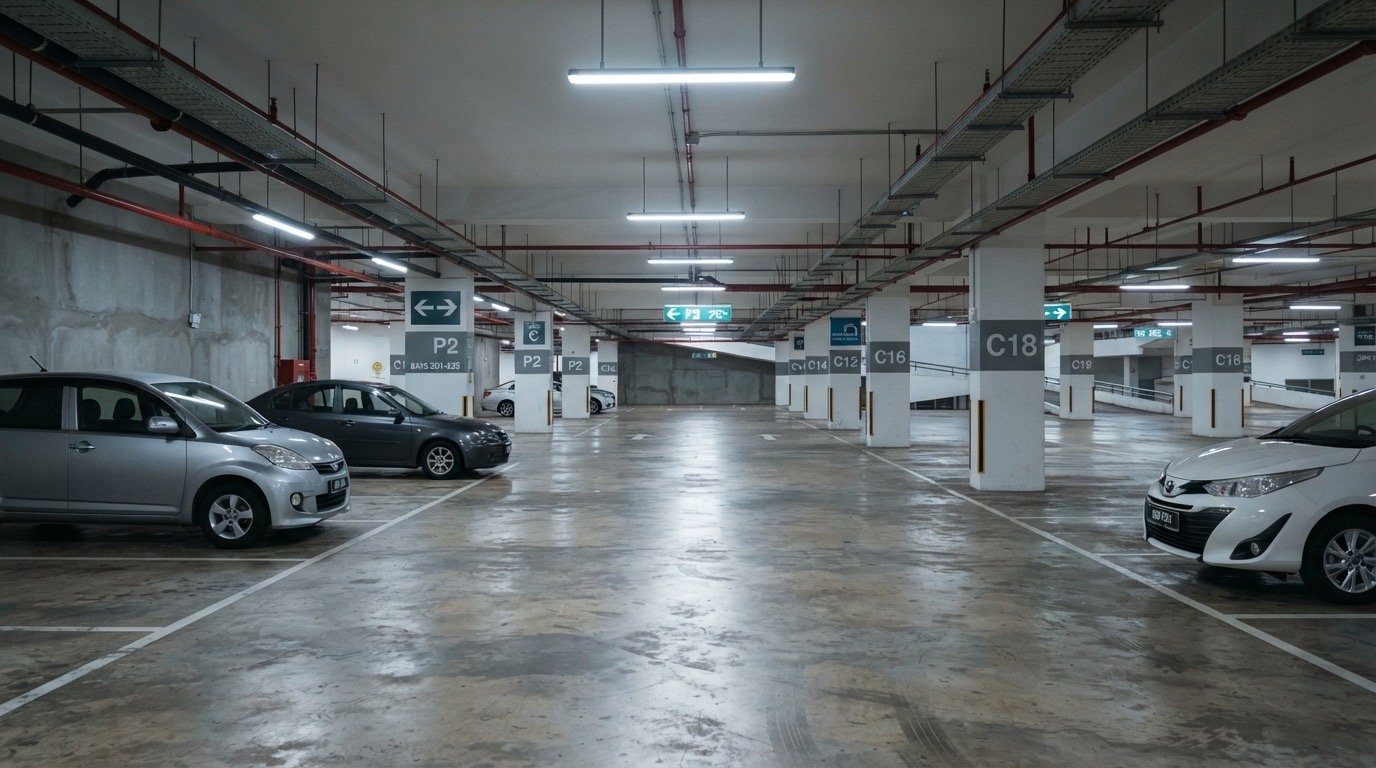
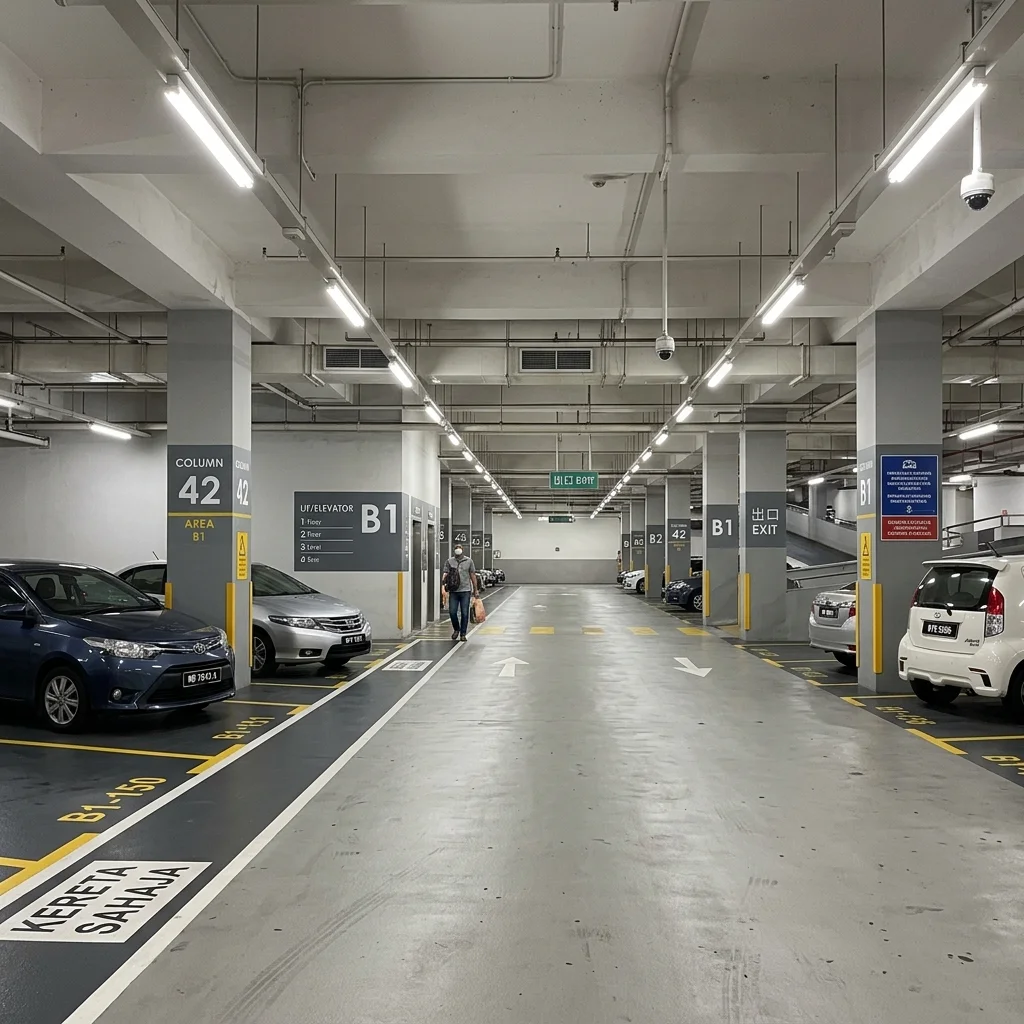
The most immediate and profitable application of IoT lighting is the eradication of Ghost Electricity—the massive energy wasted when traditional lights burn at 100% in empty carparks and stairwells.
Our advanced 5.8GHz radar sensors are capable of detecting minute movements (even a person breathing) through glass and thin partitions. This data is processed instantaneously by the AIoT ecosystem.
The Impact for Facility Managers:
- Zero Energy Waste: Lights automatically dim to a 10% standby mode when areas are unoccupied, and instantly ramp to 100% when movement is detected. This alone reduces lighting electricity consumption by up to 80%.
- Space Utilization Analytics: Because the lights know when people are present, facility managers can analyze dashboard data to understand which zones of the building are highly trafficked and which are underutilized, optimizing security patrols and cleaning schedules.
3. Predictive Maintenance vs. Reactive Repairs
One of the highest hidden costs in property management is lighting maintenance. With a traditional setup, you only know a light is broken when a tenant files a complaint. Management then has to deploy a technician, troubleshoot the ballast or tube, procure the part, and manually fix it. It is incredibly inefficient.
With an IoT lighting system, the network is self-diagnosing.
If an LED T8 smart tube experiences a voltage irregularity or begins to near the end of its lifespan, the centralized dashboard flags it immediately.
Under Anyi Smart's Lighting as a Service (LaaS) model, our proactive maintenance team is alerted automatically. We deploy a replacement unit within 48 hours—often resolving the issue before the building manager or the tenants even notice it was failing. This level of predictive maintenance drastically improves tenant satisfaction and completely eliminates surprise labor costs.
4. Achieving ESG and GBI Targets with Smart Infrastructure
The Malaysian government's National Energy Transition Roadmap (NETR) and bodies like Bursa Malaysia are making sustainability reporting mandatory for large corporations.
To achieve Green Building Index (GBI) certification, you cannot rely on estimates; you need verifiable, empirical data.
IoT lighting provides exact, granular reports on energy consumption, baseline comparisons, and precise carbon emission reductions. With one click, management can export the dashboard data required by GBI assessors or corporate ESG auditors, making compliance accurate and entirely effortless.
Conclusion: Increasing Asset Value
By upgrading to IoT-enabled smart infrastructure, you aren't just saving a few Ringgit on TNB bills; you are fundamentally increasing the asset value, safety, and marketability of your commercial building.
Best of all, through Anyi Smart's Triple Zero Promise, this entire data-driven ecosystem can be deployed across your property with Zero Upfront Cost.
Is your building ready for the IoT revolution? Contact our team today to schedule a comprehensive energy audit and live dashboard demonstration.
Frequently Asked Questions (FAQ)
1. Does IoT lighting require a complicated IT integration with our servers? No. The Anyi Smart AIoT system operates on its own dedicated, highly secure wireless mesh network. It does not need to piggyback on your building's corporate Wi-Fi, ensuring zero cybersecurity risks to your internal data.
2. Can we view the data dashboard on mobile devices? Yes. Facility managers and JMB committee members are provided with secure access to a cloud-based dashboard that can be monitored in real-time from any desktop, tablet, or smartphone.
3. What if the internet goes down? Will the lights stop working? Absolutely not. The core intelligence (the 5.8GHz radar and dimming logic) is built directly into the microchip of every individual tube. If the gateway loses internet connection, the lights will continue to operate, detect motion, and save energy flawlessly. The dashboard will simply update its data logs once the connection is restored.